
Lakeville Wood Flooring builds, caps and refinishes hardwood stairs across Lakeville, MN and has worked on wood floors here for more than 20 years, serving surrounding cities including Farmington, Apple Valley, Burnsville, Savage and Elko New Market. Capping carpeted stairs in hardwood, replacing worn treads, fitting nosings and returns, matching a staircase to a newly refinished floor and repairing the squeaks a twenty-year-old flight has developed all sit in this work.
Stairs are quoted per tread, and that is a deliberate choice rather than an industry quirk. Each step is joinery: a tread, a riser, a nosing and often a mitered return, all fitted individually, and none of it can be machine sanded the way a floor can. Pricing per tread puts the real labor in front of you instead of hiding it inside a square-foot rate that assumes a stair is simply small floor.
The other thing stairs do is show everything. They sit at eye level, they catch the most concentrated traffic in the house, and a burn-through on a nosing or a gap at a return is visible from the room below for as long as the staircase exists. That is why this is the part of a job we slow down for.
Capping, Replacing and Building Stair Treads
What Is Under the Carpet
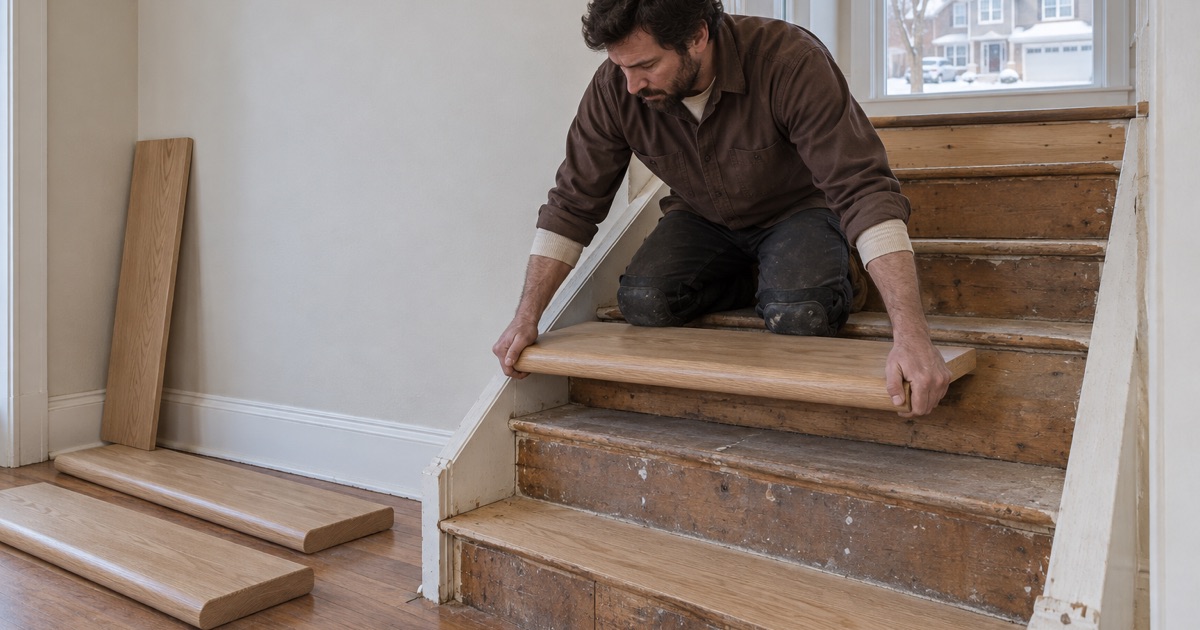
Stairs that have always been carpeted usually have construction-grade treads underneath, often with a bullnose that was never meant to be seen and sometimes with a plywood riser. We pull a section at the quote to establish what is actually there, because capping over sound treads and replacing unsound ones are different jobs at different prices. Nobody should be quoting stairs without having looked.
Retrofit Treads Against Full Replacement
A retrofit tread caps the existing step with a thinner piece of hardwood and a matching riser, which is quicker and disturbs less trim. Full replacement removes the old tread entirely and fits solid stock, which gives more thickness for future refinishing and a more substantial feel underfoot. Skirt boards, balusters and the existing rise and run all influence which is appropriate, and we explain the trade rather than defaulting.
Nosings, Returns and the Details That Show
The nosing is the front edge and the hardest-worked part of the whole staircase; on an open side, the mitered return that wraps it is the detail people notice most. Both are cut and fitted by hand. A return that opens at its miter after one heating season means the joinery was tight to the day rather than to the year, which is a species and moisture content question we settle at the quote.
Refinishing an Existing Staircase
Hand and Edger Work Throughout
A drum sander cannot reach a stair, so treads are worked with an orbital or by hand, risers are done separately, and nosings are sanded by hand because their radius burns through faster than anything else on the staircase. The time per square foot is several times that of a floor. Our proposals name the grit sequence for the stairs specifically rather than folding them into the floor’s.
Matching the Newly Refinished Floor
When the main floor is being refinished, the stairs should be handled in the same campaign, with the same stain sampled on the actual treads and the same finish system over the top. Doing stairs later means matching a cured finish from memory, which rarely lands. Where a color change is involved we sample on the stairs themselves, since tread stock is often a different grade from the floor.
Worn Nosings and Traffic Damage
Stair nosings wear before anything else in the house, and by the time somebody calls, the finish there is usually gone and the wood under it rounded. Where enough material remains, sanding and rebuilding the profile works; where it does not, individual treads are replaced and blended into the flight. We measure what is left rather than sanding and hoping.
Squeaks, Movement and Stairs That Have Aged
Fixing From Below Where There Is Access
An unfinished basement ceiling under a staircase is a gift, because the repair happens entirely out of sight. Glue blocks, wedges driven into the tread-to-riser joints and screws set from behind the riser take the movement out permanently with nothing visible on the finished side. We always check for that access before proposing anything that involves fastening through the face.
Repairs Made From the Top
Where the underside is finished, squeaks are addressed from above by screwing through the tread into the stringer and plugging the holes with matching material, or by removing and resetting the tread. Both are legitimate; both leave evidence if done carelessly. Plugs are cut from the same species and oriented with the grain so they disappear under the finish.
Seasonal Movement on a Staircase
A flight that creaks in January and goes quiet by June is usually reporting the same seasonal shrinkage the floors are, with treads pulling slightly away from risers as the house dries out. That is not a defect and it does not need fastening. We separate it from real movement before quoting, and where a whole-house humidifier is what would settle it, we say that instead of selling stair work.
- 20+ Years in the Trade
- Free Written Estimates
- Moisture Readings on Every Quote